Changes
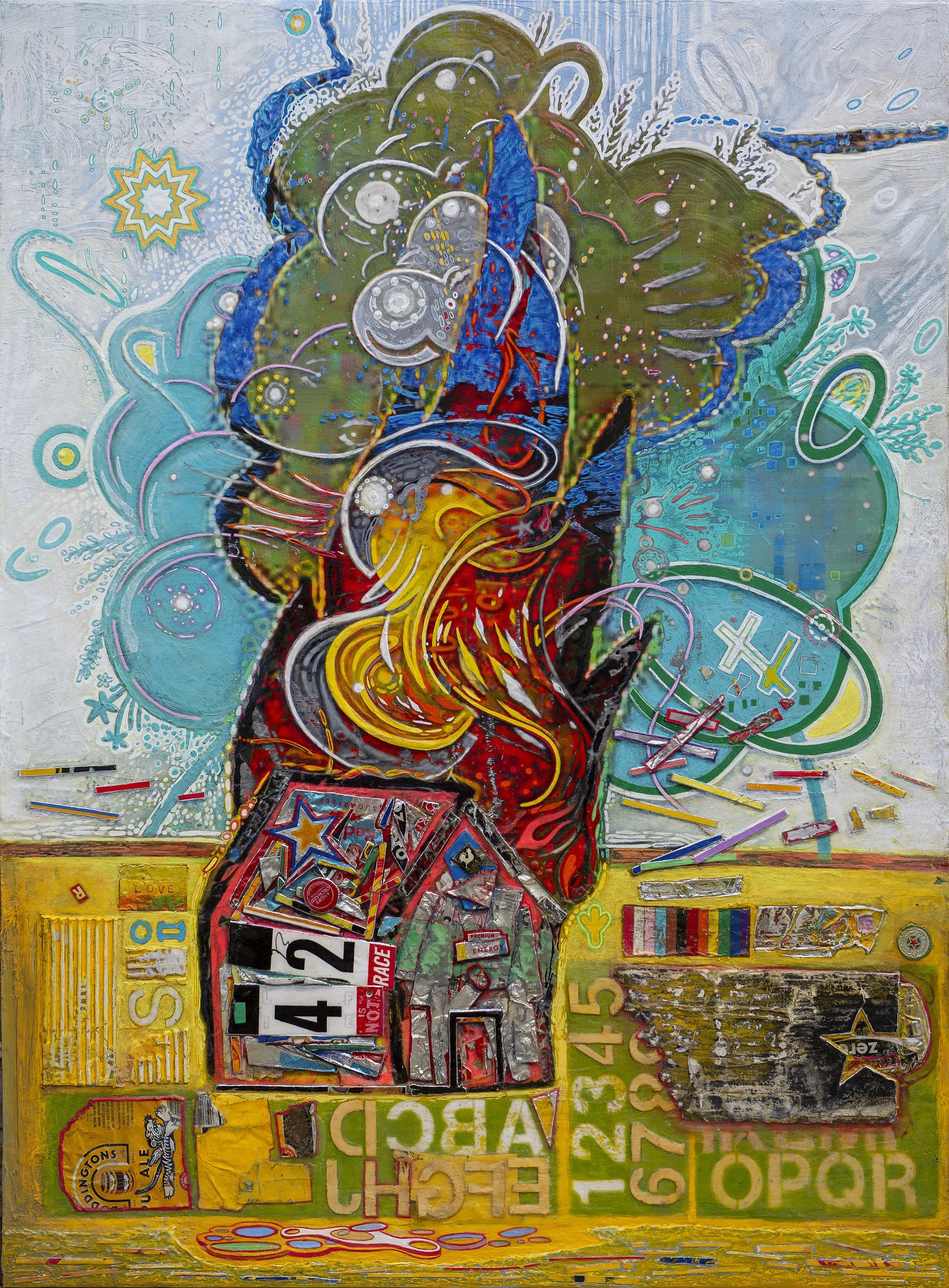
Changes
Acrylic and mixed media on stretcher frame wood panel
34.35" x 44.25"
Changes
Artist Reflection
For me, Changes is deeply connected to my cancer experience and the long, ongoing reality of survivorship. The house on fire represents a body and a life that have been altered by trauma, treatment, setbacks, and time — but not destroyed. The flame is not only pain or loss; it is the energy that remains, the part of me that continues to adapt, endure, and create within new limits. Over the years, I have had to accept that some things no longer work the way they once did, but those limits have also forced me to become more patient, more resourceful, more compassionate, and more aware of what truly matters.
In that sense, Changes symbolizes the way I have learned to live inside transformation rather than resist it. The patched house, the reflective fragments, the weathered materials, and the eternal flame all speak to a life rebuilt piece by piece. My setbacks have changed me, but they have also shaped me. They have taught me that resilience is not about returning to who I was before; it is about discovering what can still grow, burn, shine, and remain alive in me now.
The Painting
Changes is a painting of a house on fire, but not in the obvious sense. The house is not simply being destroyed. It is burning, shifting, weathering, and transforming. Its flames become less a symbol of loss than a force of energy: colour, heat, memory, movement, and resilience.
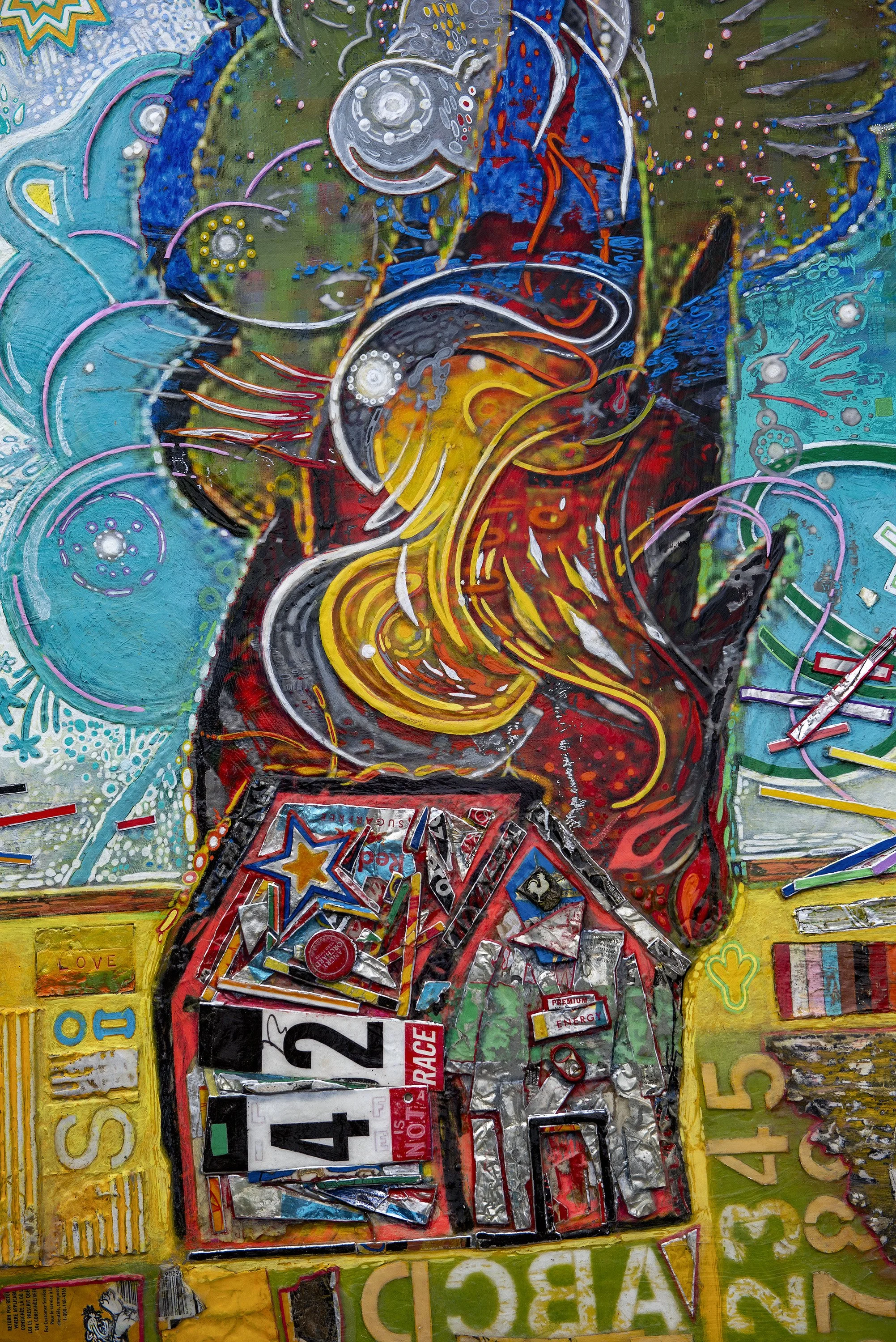
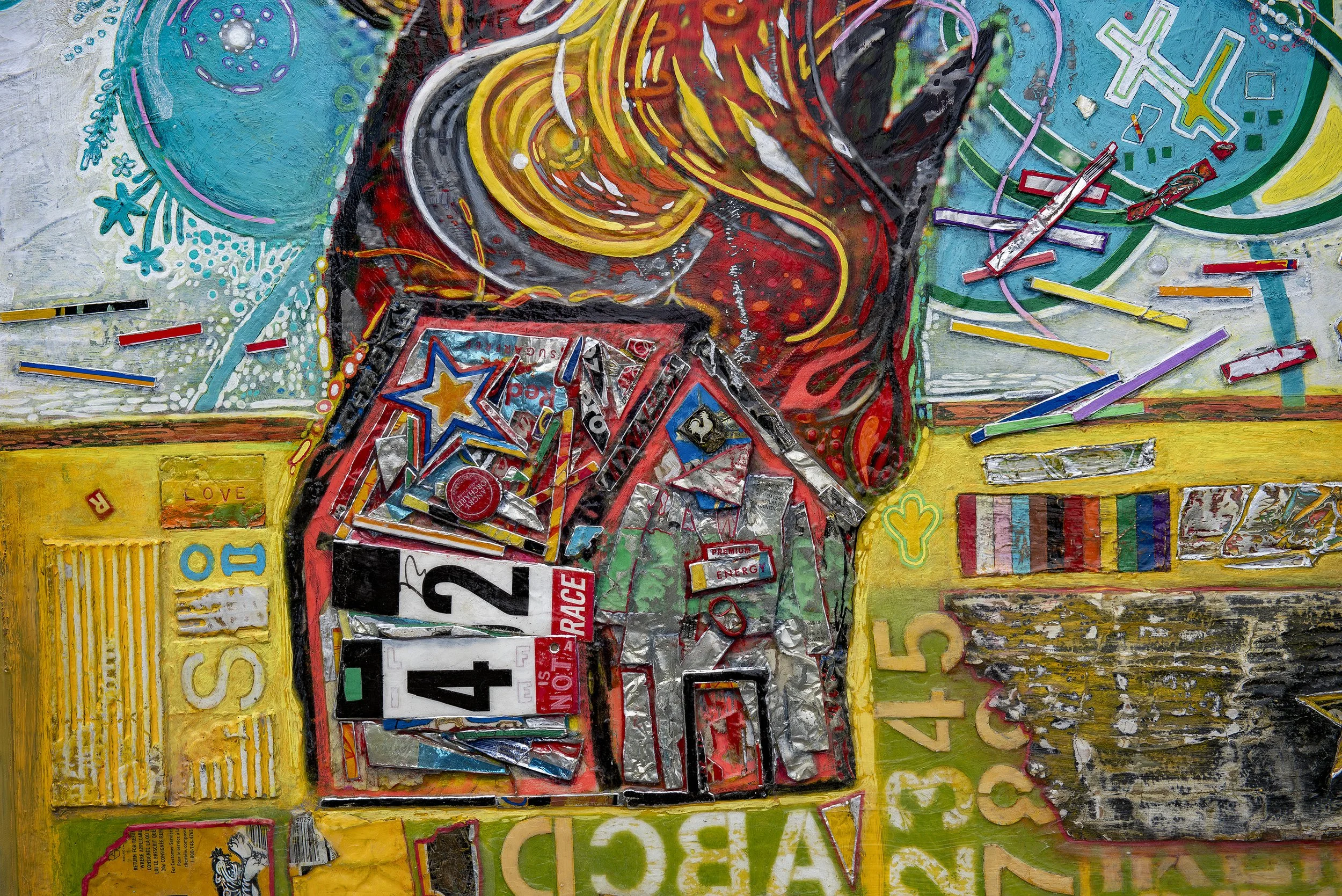
Developed and reworked over many years, the painting carries the feeling of accumulated time. The lower third of the composition acts as a kind of constructed ground. A yellow field supports the house and flame, while stencilled letters and numbers, some spray-painted and others cut by hand from tin, form a visual foundation beneath it. Around the house, fragments of material gather like remnants after a storm: flattened beer-can metal, painted corrugated cardboard, fence-like motifs, a hidden cactus, and a horizontal strip of tin marked with the colours of the Pride flag. These elements do not fit together perfectly, yet they hold their place. Their irregularity creates a sense of survival, repair, and imperfect belonging.
At the very bottom of the painting, a narrow golden river runs across the surface. Small collaged pieces of metallic foil drift through it like boards or fragments of wood, suggesting both debris and passage. Above this grounded plane, the house rises as a patched and luminous structure. Crumpled and flattened pieces of reflective foil catch the light as the viewer moves, giving the surface a shifting, almost living quality. The house appears boarded, protected, wounded, and animated all at once. A hot pink flame burns from within, suggesting an interior force that cannot be extinguished.
The upper two-thirds of the painting are dominated by a large, stylized flame. It is not realistic; it feels almost folkloric, cosmic, and dreamlike. Swirling lines, sparks, and shadowed forms create the illusion that the fire is lifting off the surface. The flame becomes eternal rather than temporary — a sign of continuing energy rather than final destruction. Around it, turquoise cloud forms offer a counterpoint to the heat. Their cool, circular shapes suggest purification, breath, and renewal, as though the painting is creating its own atmosphere of recovery.
Changes is a kinetic work. Its fragments seem to hover, rise, fall, or be pulled into motion. The viewer is left unsure whether the house is coming apart or being remade. That uncertainty is central to the painting’s meaning. It speaks to the forces that alter us, the storms we endure, and the strange beauty that can remain after rupture. In this work, change is not only damage. It is transformation. It is the evidence of something still alive.